KPV Peptide: Benefits, Dosage Chart, Reconstitution And Side Effects
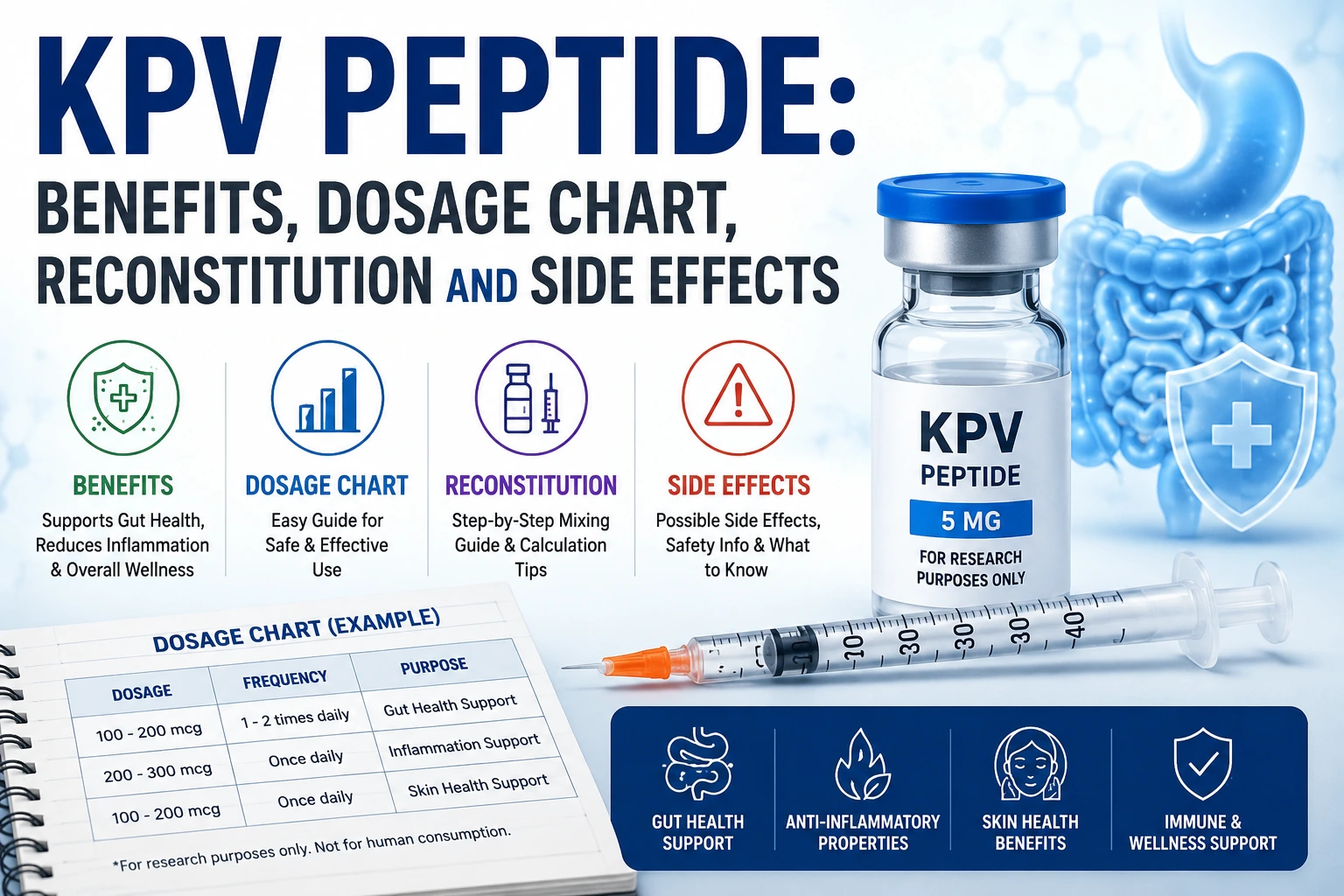
KPV peptide plays a major role in gut health, inflammation research, skin wellness and peptide based biohacking. Chronic inflammation is the major issue in the health sector which causes digestive problems, early aging and skin problems. Researchers and wellness communities are using KPV because of its anti-inflammatory properties and its connection to immune system regulation.
Unlike other peptides KPV is often studied for its role in supporting inflammatory balance rather than muscle growth or performance enhancement.
What Is KPV Peptide?
KPV stands for the 3 amino acid sequence:
- Lysine
- Proline
- Valine
It is a small peptide fragment which is derived from alpha-melanocyte-stimulating hormone known as α-MSH. It is involved in the inflammation regulation and immune signaling. Researchers have studied KPV peptide because it helps to modulate inflammatory pathways linked to skin and gastrointestinal conditions.
KPV peptide is popular because of its:
- Small molecular structure
- Anti-inflammatory properties
- Gut related research Purpose
- Skin wellness benefits
- Immune modulation potential
How KPV Peptide Works
Research data shows that KPV may influence inflammatory signaling pathways within the body. Studies suggest KPV peptide may interact with:
- inflammatory cytokines
- immune signaling pathways
- oxidative stress mechanisms
- intestinal barrier function
The most important pathway is the NF-kB inflammatory pathway which is involved in immune response and inflammation regulation. Because inflammation is connected to many conditions so KPV has become a major topic in:
- gut health research
- peptide communities
- anti-inflammatory peptide studies
- skin health discussions
KPV Peptide Benefits
1. Gut Health Research
KPV peptide is connected to gut inflammation research. Researchers are investigating KPV in studies involving:
- intestinal inflammation
- gut barrier integrity
- inflammatory bowel conditions
- microbiome-related discussions
KPV is often discussed alongside peptides like:
- BPC-157
- TB-500
- LL-37
2. Skin Health Support
KPV has also gained popularity in skincare and aesthetic communities. Research discussions often mention:
- redness
- irritation
- inflammatory skin responses
- skin barrier support
Some peptide based skincare products now reference KPV because of these growing research interests.
3. Anti-Inflammatory Properties
Inflammation is one of the most discussed topics in peptide research. Researchers are exploring whether KPV may help to regulate:
- inflammatory cytokines
- oxidative stress
- immune signaling
- inflammatory responses
4. Immune System Research
Scientists are also studying how KPV may influence immune balance. Current discussions involve:
- immune modulation
- inflammatory signaling
- cellular communication
- peptide receptor activity.
KPV Peptide Reconstitution Guide
Reconstitution refers to mixing a peptide powder with liquid. Common terminology includes:
- milligrams (mg)
- milliliters (mL)
- concentration
- syringe units
Many beginners become confused because peptide calculations involve multiple unit conversions. Educational calculators simplify this process by helping users understand:
- concentration estimates
- measurement conversions
- liquid ratios
- syringe scaling
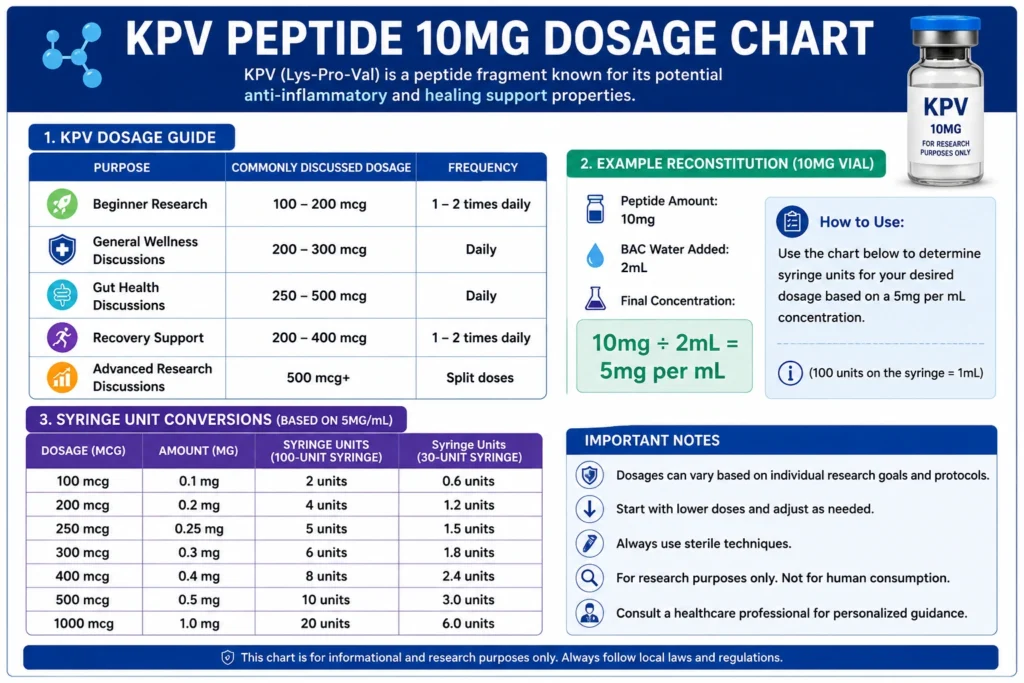
KPV Peptide Dosage Chart and Schedule
KPV peptide dosage discussions can vary depending on research goals, peptide concentration, and individual preferences. Most people searching for KPV dosage information are usually looking for simple schedules and easy-to-understand measurement guidance.
| Purpose | Commonly Discussed Range | Typical Schedule |
| Gut health support | Low-dose discussions | 1–2 times daily |
| Inflammation support | Moderate research discussions | Daily |
| Skin wellness discussions | Lower concentration routines | Once daily |
| General peptide research | Varies by protocol | Short-term cycles |
KPV Peptide vs BPC-157
People compare KPV with BPC-157 because both peptides are used in gut health communities.
| Feature | KPV | BPC-157 |
| Main Research Focus | Inflammation | Tissue repair |
| Gut Health Discussions | High | High |
| Skin Research Interest | Moderate | Moderate |
| Anti-Inflammatory Interest | Strong | Moderate |
| Biohacking Popularity | Growing | Very High |
KPV Peptide Side Effects
Digestive Problems
Some users may get mild stomach discomfort or bloating from peptide injections. These side effects may be different for every user depending on individual sensitivity and peptide concentration.
Injection Site Irritation
In injectable discussions, temporary redness, itching, or irritation around the application area is sometimes mentioned. Improper reconstitution or poor injection technique may increase irritation risk.
Fatigue
Some users discuss temporary tiredness or low energy level after peptide use.
Headaches
Some Users may face mild headaches. Hydration, dosage accuracy and individual sensitivity may influence these experiences.
Sensitivity Reactions
Some people may experience sensitivity reactions because peptide responses can differ between users. Product quality and ingredient purity may also play an important role.
Nausea
Temporary nausea is sometimes discussed when peptide concentrations or calculations are inconsistent. Beginner calculation mistakes and improper mixing can occasionally contribute to discomfort.
Anyone considering peptide related products should consult qualified healthcare professionals.
Frequently Asked Questions
What is KPV peptide used for?
KPV is primarily used in anti-inflammatory, gut health and skin health research communities.
Is KPV the same as BPC-157?
No. They are different peptides with different research focuses and mechanisms.
What Does KPV Peptide Do?
KPV peptide is used to support gut health, reduce inflammation and improve skin related issues. Many people use KPV because it may help to calm the irritation inside the body and support overall wellness.
Final Thoughts
KPV peptide has become one of the most discussed anti-inflammatory peptides in modern peptide communities. Peptide Researchers continue studying its possible role in gut health, immune signaling, inflammation balance and skin related pathways.