The Glow Peptide Stack: Complete Guide to GHK-Cu, BPC-157 & TB-500 for Skin
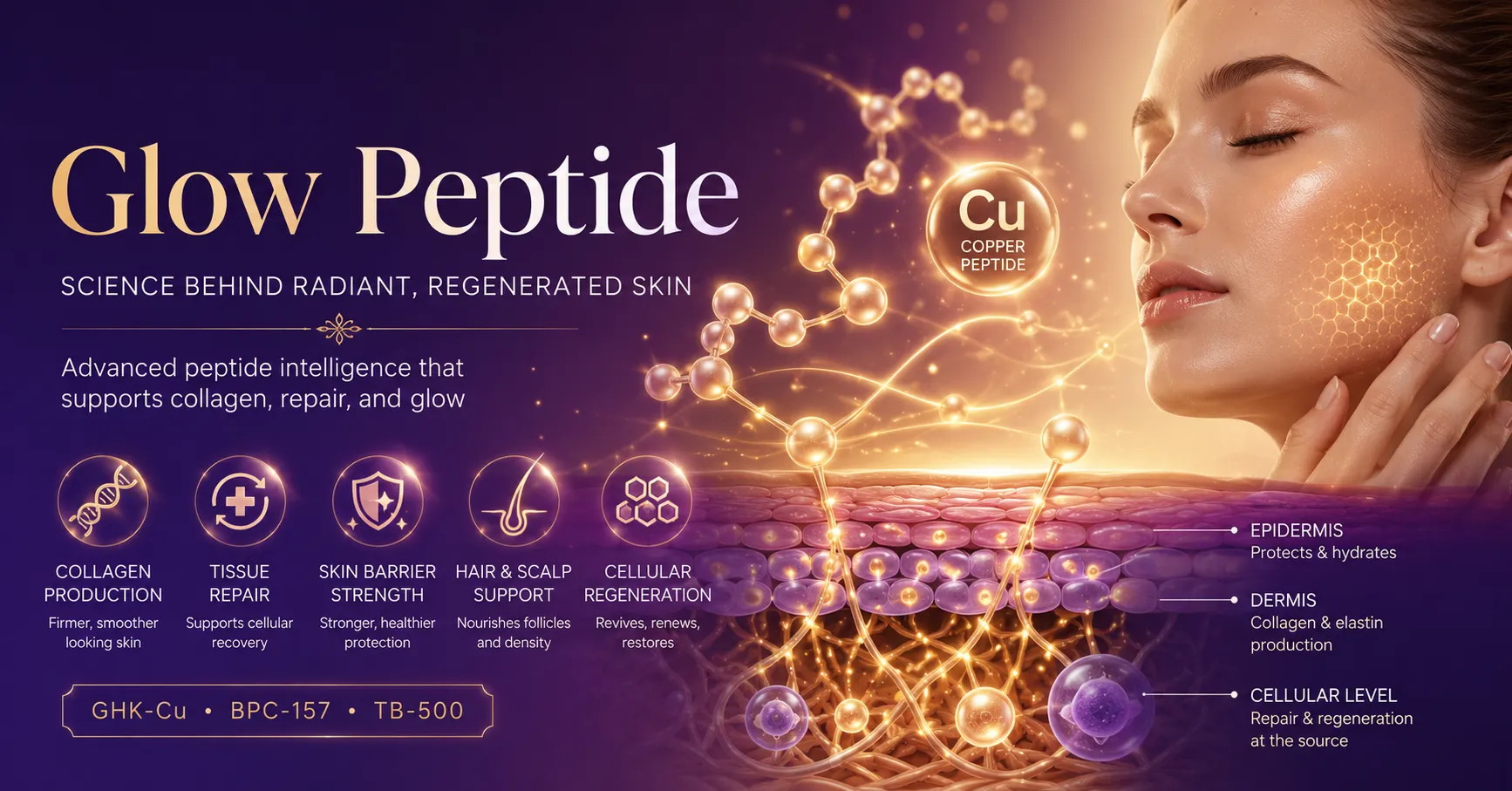
Glow Peptide Stack
The Glow Peptide Stack is a powerful combination of three bioactive peptides that work together to stimulate collagen synthesis, speed up tissue repair, reduce inflammation and support cellular energy. Used in cycles of 4–8 weeks under medical supervision.
These peptides are GHK-Cu (copper peptide), BPC-157 (body protection compound), and TB-500 (Thymosin Beta-4 fragment).
The glow peptide stack has become very famous protocol in regenerative medicine and aesthetic wellness. It work only on the skin’s surface but peptide therapy works at the cellular level which signal your body to produce more collagen, repair damaged tissue and restore cellular energy from within. The global peptide therapeutics market was valued at $39.2 billion in 2023 and is projected to reach $73.4 billion by 2030.
What Is the Glow Peptide Stack? — Definition & Core Concept
Peptides are short chains of amino acids also known as the building blocks of proteins. In the human body, they act as biological signaling molecules for telling cells how to behave, repair and communicate. The term “glow peptide stack” refers to a curated combination of peptides specifically selected to target the skin health, recovery and cellular vitality at the same time.
Instead of using one compound alone, multiple complementary agents are used to target different pathways at a time.
Key Statistic: According to the National Institutes of Health (NIH), peptides now represent over 7% of all drugs in clinical development worldwide. More than 80 peptide drugs are currently FDA approved.
What Makes It a “Glow” Stack Specifically?
It improves the skin texture, reduced fine lines, enhanced radiance and faster the recovery from both physical stress and environmental damage that is why it is famous as “Glow Stack peptide”. The three core peptides address different but complementary mechanisms:
| Peptide | Primary Role | Key Mechanism | Main Benefit |
| GHK-Cu | Skin repair & collagen | Fibroblast activation, antioxidant | Firmness, elasticity, wound healing |
| BPC-157 | Tissue repair, gut health | Angiogenesis, anti-inflammatory | Tendon/muscle recovery, reduced inflammation |
| TB-500 | Cell migration, regeneration | Actin regulation, wound repair | Systemic healing, anti-fibrotic |
The 3 Core Peptides: Deep Science Explained
1. GHK-Cu (Copper Peptide) — The Skin’s Master Regulator
GHK-Cu (Glycyl-L-Histidyl-L-Lysine copper complex) is one of the most extensively researched peptides in dermatology. First isolated from human plasma in 1973 by Dr. Loren Pickart, it occurs naturally in the body and declines significantly with age — levels drop from approximately 200 ng/mL at age 20 to under 80 ng/mL by age 60.
Clinical Evidence: A 2018 review in the International Journal of Molecular Sciences (Pickart & Margolina) analyzed GHK-Cu’s effects on over 4,000 human genes. Findings showed it upregulates genes associated with collagen synthesis, antioxidant defenses, and tissue remodeling, while downregulating genes linked to inflammation and cancer progression.
GHK-Cu works through multiple mechanisms simultaneously. It activates fibroblasts to produce collagen, elastin, and glycosaminoglycans — the structural proteins that give skin its firmness and moisture retention. It also acts as a potent antioxidant, chelating copper ions to neutralize free radical damage. Additionally, it stimulates angiogenesis (new blood vessel formation), improving nutrient delivery to skin cells.
2. BPC-157 (Body Protection Compound) — The Repair Peptide
BPC-157 is a 15-amino-acid synthetic peptide which is derived from a gastric protein found in human gastric juice. The term “Body Protection Compound” shows its broad tissue protective properties, which have been extensively documented in animal models and early human studies.
Important Note: While BPC-157 shows significant performance in preclinical studies, most human evidence remains anecdotal or from small-scale trials as of 2026. It is not FDA approved as a drug, and it is available through compounding pharmacies under medical supervision.
Mechanistically, BPC-157 promotes angiogenesis, activates growth hormone receptor expression in tendon fibroblasts and modulates nitric oxide pathways to reduce inflammation. It has been studied for applications ranging from tendon and ligament repair to inflammatory bowel disease, with outstanding results across multiple tissue types.
3. TB-500 / Thymosin Beta-4 — The Systemic Healer
TB-500 is a synthetic peptide fragment derived from Thymosin Beta-4 (Tβ4), a naturally occurring protein originally isolated from the thymus gland. It is the most abundant intracellular peptide in mammalian cells which plays a critical role in actin regulation, cell migration and differentiation.
Research Highlight: A 2021 paper in International Journal of Molecular Sciences (Maar et al.) described Thymosin Beta-4 as a “developmentally essential secreted peptide” capable of reactivating adult organ regeneration pathways similar to those active during embryonic development.
How the Glow Peptide Stack Works Synergistically
The true strength of the glow peptide stack lies in the synergistic interaction of three peptides across complementary biological pathways. Think of it as a three pronged approach:
- GHK-Cu activates the “build” pathway for stimulating collagen, elastin, and new skin structure
- BPC-157 manages the “repair” pathway for clearing inflammation and repairing damaged connective tissue
- TB-500 drives the “regenerate” pathway for mobilizing stem cells and accelerating wound closure
Together, these three mechanisms create a complete regenerative environment where new tissue can form faster, inflammation is controlled and the structural integrity of skin and connective tissue is actively rebuilt.
Synergy Explained: Research in systems biology shows that targeting multiple pathways simultaneously (multi-target therapy) often produces non-linear improvements — meaning 1+1+1 can equal 5 rather than 3 when mechanisms are complementary. This is the scientific rationale behind peptide stacking protocols.
Benefits of the Glow Stack Peptide: Evidence-Based Overview
Skin Health & Anti-Aging Benefits
The skin benefits of the glow peptide stack are:
- Collagen density — increased production of Type I and Type III collagen, the primary structural proteins in skin
- Skin elasticity — restoration of elastin fibers responsible for skin’s bounce back quality
- Fine lines and wrinkles — documented reduction in depth and severity with consistent use
- Hyperpigmentation — modulation of melanin production through antioxidant pathways
- Wound healing speed — accelerated closure and reduced scarring in clinical settings
Recovery & Athletic Performance
Athletes and high performance individuals have increasingly adopted glow peptide protocols for their recovery benefits. BPC-157 and TB-500 show excellent results for:
| Condition | Peptide(s) Studied | Observed Outcome |
| Tendon injuries | BPC-157 | Accelerated healing, reduced pain |
| Muscle tears | TB-500, BPC-157 | Faster regeneration, reduced fibrosis |
| Joint inflammation | BPC-157 | Anti-inflammatory, protective |
| Post-surgical healing | GHK-Cu, TB-500 | Reduced scar tissue, faster closure |
| Exercise-induced damage | GHK-Cu + collagen peptides | Reduced DOMS, improved recovery markers |
Cellular Energy & Mitochondrial Support
Emerging research suggests GHK-Cu influences mitochondrial function by up regulating genes in the oxidative phosphorylation pathway. Healthy mitochondrial function is foundational to cellular energy production and declining mitochondrial efficiency is a sign of aging. When the glow peptide stack is combined with NAD+ support through IV therapy, injections or supplementation then users often report amplified results in both energy levels and recovery speed.
Real-World Use Cases: Who Uses the Glow Peptide Stack?
Use Case 1: The 40+ Woman Combating Collagen Loss
Women over 40 experience a dramatic acceleration in collagen loss — approximately 1–2% per year after age 30, accelerating sharply after menopause due to declining estrogen. Many turn to glow peptide protocols after finding that topical solutions (retinoids, vitamin C serums) can no longer keep pace with the rate of structural degradation.
Typical protocol: GHK-Cu subcutaneous injection 2–3x/week, 4–6 week cycles Objective: Restore collagen density, improve skin laxity, reduce perioral lines Timeline: Visible improvements in skin texture typically reported at 6–10 weeks
Use Case 2: The Athlete with a Chronic Tendon Injury
Competitive athletes with lingering tendinopathy — a notoriously slow-healing condition due to poor blood supply to tendons — represent another major use case. Traditional treatments (physical therapy, corticosteroid injections, PRP) often provide incomplete relief. BPC-157’s documented pro-angiogenic effects make it particularly compelling for tendon injuries.
Typical protocol: BPC-157 + TB-500 combination, 5 days on/2 days off Objective: Accelerate tendon repair, reduce chronic inflammation Important: Always under physician supervision with documented injury diagnosis
Use Case 3: The Biohacker Optimizing Longevity
The longevity-focused biohacking community has embraced glow peptide stacks as part of comprehensive anti-aging protocols. This group typically combines the stack with other evidence-based interventions: NAD+ precursors, senolytics, caloric restriction mimetics, and continuous biomarker tracking.
Use Case 4: Post-Procedure Aesthetic Recovery
Aesthetic medicine practitioners increasingly use peptide protocols to accelerate recovery after procedures like laser resurfacing, micro-needling, or surgical facelifts. GHK-Cu in particular has demonstrated value in post-wound healing, reducing recovery time and improving final outcomes.
Glow Peptide Stack vs. Alternatives: Honest Comparison
| Approach | Mechanism | Evidence Level | Cost (monthly est.) |
| Glow Peptide Stack | Systemic cellular signaling | Moderate-Strong (preclinical + some clinical) | $150–$600+ |
| Topical Retinoids | Surface cell turnover | Strong (FDA-approved for aging) | $20–$200 |
| PRP (Platelet-Rich Plasma) | Growth factor delivery | Moderate (clinical studies) | $500–$2,000/session |
| Collagen Supplements (oral) | Substrate supply | Moderate (meta-analyses exist) | $30–$80 |
| Exosome Therapy | Stem cell signaling | Emerging (limited human data) | $1,000–$5,000/session |
| NAD+ IV Therapy | Mitochondrial support | Moderate-Strong | $200–$800/session |
The glow peptide stack is more targeted and systemic than topical treatments, less expensive per treatment than PRP or exosome therapy and increasingly supported by peer-reviewed science.
Glow Peptide Stack Dosage & Protocol: What Research and Clinicians Suggest
Medical Disclaimer: Dosing information below is for educational purposes only and reflects protocols reported in the medical literature and wellness clinics. Peptides are not FDA approved for cosmetic use. All peptide therapy must be overseen by a licensed physician. Individual dosing varies based on body weight, health status, and treatment goals.
Standard Cycling Protocol
- Cycle length: 4–8 weeks on, 2–4 weeks off (prevents receptor desensitization)
- Administration: Typically subcutaneous injection (highest bioavailability)
- Frequency: GHK-Cu — 2–3x/week; BPC-157 — daily or 5x/week; TB-500 — 2x/week
- Monitoring: Baseline bloodwork recommended; track inflammatory markers and skin health metrics
Bioavailability by Delivery Method
| Delivery Method | Bioavailability | Onset | Notes |
| Subcutaneous injection | ~90%+ ✅ | 30–60 min | Gold standard for most peptides |
| Intramuscular injection | ~85% | 20–45 min | Alternative to subcutaneous |
| Topical (GHK-Cu serum) | ~10–30% | Hours to days | Lower bioavailability, surface benefits |
| Oral supplement | ~5–15% | Variable | Most peptides degraded by digestion |
Side Effects, Safety Profile & Who Should Avoid It
Commonly Reported Side Effects
- Injection site reactions: redness, mild swelling, bruising (typically resolves within 24–48 hours)
- Headaches: reported by some users, usually transient in the first 1–2 weeks
- Fatigue or mild nausea: occasionally reported at higher doses, often self-resolving
- Flushing or warmth: associated with vasodilatory effects of BPC-157
Who Should NOT Use the Glow Stack Peptide
Contraindications — Avoid peptide stacks if you:
- Are pregnant, trying to conceive, or breastfeeding
- Have a personal or family history of hormone-sensitive cancers (breast, prostate, ovarian)
- Have active autoimmune disease or are immunocompromised
- Are currently taking medications that interact with growth factor pathways
- Have uncontrolled thyroid conditions
The FDA emphasizes that compounded peptides must only be used under qualified medical supervision due to significant variability in purity, concentration, and sterility across compounding pharmacies. Always request a certificate of analysis (COA) from any peptide source.
Frequently Asked Questions: Glow Peptide Stack
What does the glow peptide stack actually do?
It combines three bioactive peptides — GHK-Cu, BPC-157, and TB-500 — that work synergistically to stimulate collagen production, accelerate tissue repair, reduce chronic inflammation and support cellular energy. The net effect is visibly healthier skin, faster recovery from physical stress, and improved systemic resilience.
How long before I see results from the glow peptide stack?
Skin texture and hydration changes are typically first noticeable at 4–6 weeks. More structural changes — collagen density, fine line reduction, improved elasticity — generally become apparent at 8–12 weeks. Recovery benefits (for athletes or post-procedure) often manifest within 2–4 weeks.
Is the glow peptide stack legal?
The individual peptides (GHK-Cu, BPC-157, TB-500) are not FDA-approved pharmaceutical drugs for cosmetic or athletic use. They are legally available through licensed compounding pharmacies with a physician’s prescription in the United States. Their legal status varies internationally — always verify in your jurisdiction before obtaining peptides.
Can glow peptides be combined with NAD+ therapy?
Yes — and many practitioners actively recommend this combination. NAD+ supports mitochondrial function and cellular energy, creating an optimal intracellular environment for peptide-signaled repair processes to occur efficiently. The combination is considered complementary rather than additive in mechanism.
What is the difference between a glow peptide injection and a glow peptide serum?
Injections deliver peptides directly into subcutaneous tissue with ~90% bioavailability, making them significantly more effective for systemic effects. Topical serums (particularly GHK-Cu) have a role in surface-level skin benefits but cannot replicate the systemic regenerative effects of injectable protocols.
Are there natural alternatives to the glow peptide stack?
Foundational lifestyle factors support similar pathways naturally: collagen-rich diet (bone broth, vitamin C), resistance exercise (stimulates collagen synthesis), quality sleep (peak growth hormone secretion occurs at night), and sun protection (prevents collagen degradation). These remain important even for those using peptide therapy — they’re complementary, not competing strategies.
How to Find Qualified Glow Peptide Therapy Near You
Peptide therapy should never be self administered without medical oversight. When seeking a qualified provider, look for:
- Board certified physician (MD or DO) with experience in regenerative or functional medicine
- Use of compounding pharmacies with verifiable GMP (Good Manufacturing Practice) certifications
- Pretreatment baseline bloodwork including inflammatory markers, hormone panels, and kidney/liver function
- Clear cycling protocols and follow-up monitoring plans
- Transparent pricing with no hidden upsells or pressure tactics
Geographic Availability (USA): Glow peptide stack therapy and related IV wellness protocols are available across major metropolitan areas including New York City, Los Angeles, Miami, Chicago, Dallas, Houston, Phoenix, Seattle, and Denver, as well as internationally in London, Dubai, Sydney, and other major cities. Telehealth options for peptide prescriptions have also expanded significantly since 2024.
Conclusion: Is the Glow Peptide Stack Right for You?
The glow peptide stack is a combination of GHK-Cu, BPC-157 and TB-500 which represents a scientifically grounded, mechanistically coherent approach to skin health, recovery, and cellular regeneration. It is not a magic bullet, and it is not for everyone. But for individuals who have optimized the fundamentals (sleep, nutrition, exercise, sun protection) and are looking for the next level of cellular support, it offers a compelling and increasingly well documented option.
The key differentiator from competing approaches: while topical treatments work only at the surface and oral supplements face significant bioavailability challenges, injectable peptide therapy delivers active compounds directly to target tissues where they can signal genuine biological change — collagen synthesis, angiogenesis, inflammation resolution and stem cell mobilization.
As with all therapeutic protocols, the right starting point is a conversation with a qualified physician who can assess your individual health status, goals, and risk factors. Done correctly, under proper medical supervision with pharmaceutical-grade compounded peptides, the glow peptide stack can be a meaningful tool in a comprehensive longevity and aesthetic health strategy.
Ready to explore glow peptide therapy?
Consult with a board-certified physician specializing in regenerative medicine. Ask specifically about GHK-Cu, BPC-157, and TB-500 protocols, request a certificate of analysis from your compounding pharmacy, and always start with a comprehensive baseline health assessment.