KLOW Peptide: Benefits, Dosage, Side Effects & Protocol
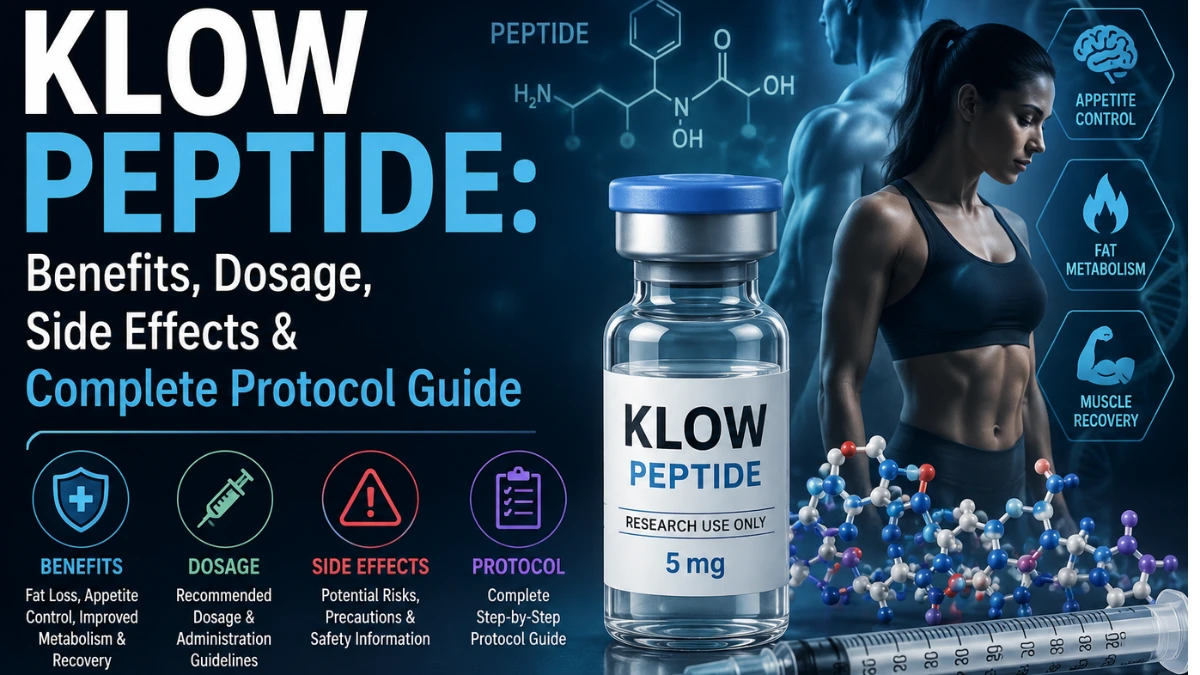
KLOW peptide is a multi peptide blend which is formulated to improve muscle recovery, fat loss and overall health performance. It is the combination of different compounds that work together to improve natural growth hormone activity and boost recovery processes in the body. You will also know how to calculate your dose correctly by using a peptide calculator. so you can avoid common mistakes.
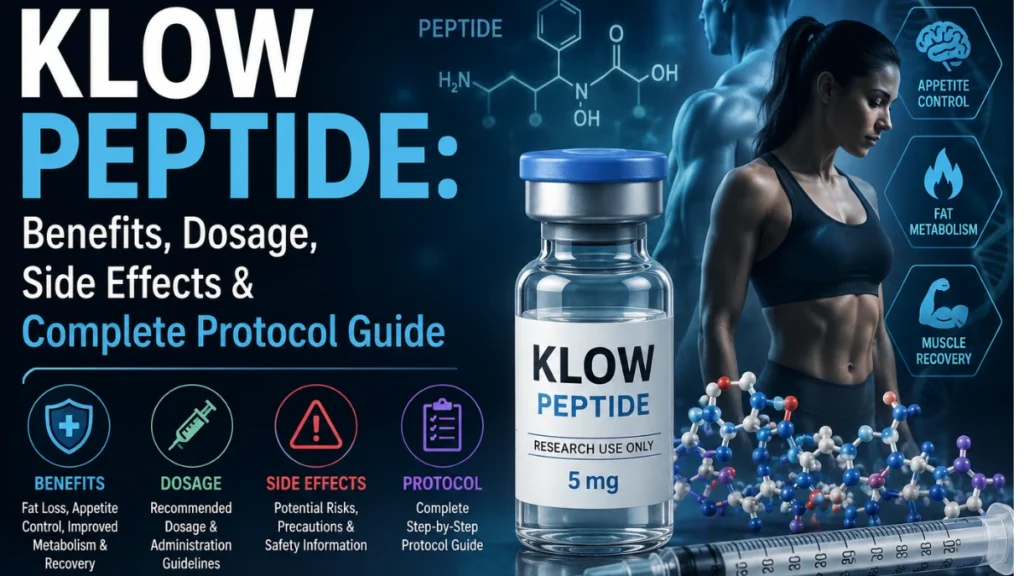
Table of Contents
What Is KLOW Peptide?
KLOW peptide is a multi-peptide blend which is used mainly for research purposes. It is not an approved medication by regulatory bodies like the FDA. That is why this is not part of standard clinical treatment.
Most Types of KLOW contain four well known peptides:
- BPC-157
- TB-500
- GHK-Cu
- KPV
The main purpose behind KLOW blend is combination therapy. Using a blend of peptides to support multiple systems in the body at once is better than using one peptide for one purpose.
KLOW Peptide Blend & Ingredients
To understand KLOW blends, explore the functions of every ingredient.
BPC-157 Peptide – 10mg
This peptide plays an important role in:
- Tissue repair
- Gut lining support
- Tendon and ligament recovery
TB-500 Peptide – 10mg
TB-500 helps in:
- Cell movement and regeneration
- Muscle recovery
- Reduced stiffness in tissues
GHK-Cu Peptide – 50mg
This is a copper peptide supported in:
- Collagen production
- Skin and wound repair
- Antioxidant activity
KPV Peptide – 10mg
KPV is mainly used for:
- Inflammation response
- Immune signaling
- Gut and skin calming effects
Why combine them?
The logic is simple. Injury recovery is not one process. It involves inflammation control, tissue rebuilding, blood flow, and collagen formation. A blend tries to support all of these at once.
How KLOW Peptide Works
KLOW works through multiple biological pathways instead of a single mechanism.
Here is the complete mechanism:
- It helps to regulate the inflammation signals in damaged tissue
- It supports cellular repair activity in muscles, skin, and connective tissue
- It may improve connections between cells during healing process
- It assists in structural rebuilding like collagen formation
However, it is important to be clear that most evidence comes from animal studies or early research models, not from large human clinical trials.
Top Benefits of KLOW Peptide Use
People use KLOW mainly for recovery related goals.
1. Muscle recovery support
It is mostly used by bodybuilders and athletes as they need faster recovery after intense workout.
2. Joint and tendon support
Some users report reduced stiffness and improved mobility over time.
3. Tissue repair assistance
It is commonly associated with soft tissue healing processes.
4. Skin and collagen support
GHK-Cu in the blend is linked with skin regeneration and collagen production.
5. Inflammation balance
KPV and other peptides help to regulate the inflammatory responses.
These effects are based on how the individual peptides behave in research, not guaranteed human outcomes.
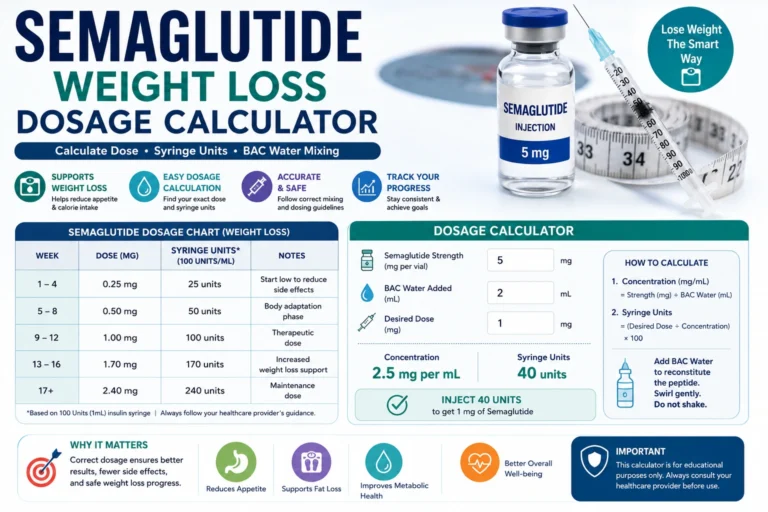
How do I calculate KLOW dosage and BAC water volume
KLOW peptide blends are available in powdered form and need mixing with bacteriostatic water (BAC water) before use.
To calculate peptide dosage properly, you need:
- Total peptide amount in the vial (mg)
- Amount of BAC water added (ml)
- Desired dose (mcg or mg)
The math can get confusing quickly.
Simple example
If you have:
- 5 mg vial
- 2 ml BAC water
Then:
- 1 ml = 2.5 mg
- 0.1 ml = 250 mcg
You can use a peptide dose calculator to convert mg into exact syringe units quickly and accurately.
This calculator helps to reduce the dosing mistakes, especially when working with microgram ranges.
KLOW Peptide Dosage (With Chart)
There is no official medical dosage for KLOW. What exists is based on common research use patterns and community practice.
General ranges
- Beginner range: 100 to 200 mcg
- Moderate range: 200 to 300 mcg
- Higher range: 300 to 500 mcg
Frequency
- Once or twice per day
- Often taken in the morning or before sleep
Example chart
| Goal | Dose Range | Frequency |
|---|---|---|
| Recovery support | 100 to 200 mcg | 1 time daily |
| Muscle support | 200 to 300 mcg | 1 to 2 times daily |
| Intense recovery use | 300 to 500 mcg | 2 times daily |
Always convert doses properly using a peptide injection calculator before injecting.
How to Use KLOW Peptide Safely
KLOW is usually administered through subcutaneous injection.
Basic steps:
- Mix peptide with BAC water
- Store in refrigerator after mixing
- Use an insulin syringe for measurement
- Inject into subcutaneous tissue (commonly abdomen or thigh)
Good practice:
- Keep injection timing consistent
- Avoid contamination
- Do not guess dosage
- Track how your body responds
KLOW Peptide Side Effects & Risks
Even though peptides are often discussed as “mild,” they are still biologically active compounds.
Possible side effects:
- Mild swelling at injection site
- Headache in some users
- Temporary water retention
Potential risks:
- Hormonal imbalance if misused
- Unknown long-term effects
- Variability between product batches
A key point here is honesty. There is limited long-term human data on peptide blends like KLOW.
Safety and Considerations
Before administering KLOW, check if it is suitable for you or not. This blend is active at a biological level, so do not use it blindly.
Active cancer
GHK-Cu and BPC-157 can increase the growth of blood vessels. That can be a concern during active cancer treatment. In this case, avoid using KLOW.
Copper-related conditions
GHK-Cu have copper-bound peptides. If you have Wilson’s disease or are sensitive to copper then this blend is not suitable for you.
During Pregnancy or breastfeeding
It is not safe to use kLOW blends in this period.
Competitive athletes
TB-4 is on the banned list for tested sports. If you compete under anti-doping rules, KLOW is not allowed.
Tracking skin results
If your goal is skin improvement, take clear photos before starting. Changes are slow and easy to miss. A week 0 photo gives you a real point of comparison after 6 weeks.
KLOW Peptide Protocol & Cycle Guide
Most users do not use peptides continuously.
Common cycle structure:
- 8 to 12 weeks on
- 2 to 4 weeks off
Beginner approach:
Start low, observe response, and increase only if needed.
Important factors:
- Sleep quality
- Training load
- Nutrition
- Recovery habits
Without these, peptides alone will not produce strong results.
KLOW Peptide vs Other Peptides
Here is a simple comparison.
| Peptide | Type | Main Focus |
|---|---|---|
| KLOW Blend | Multi-peptide | General recovery and regeneration |
| BPC-157 | Single peptide | Tissue and gut repair |
| TB-500 | Single peptide | Muscle and mobility support |
| GHK-Cu | Single peptide | Skin and collagen support |
Key difference
KLOW combines multiple effects in one product, while others target specific areas.
What is KLOW peptide used for?
It is mainly used for research purposes for recovery, tissue repair and inflammation support.
Is KLOW peptide safe?
Use of KLOW blend is generally considered safe in research but long term use safety data is limited.
How do I calculate the correct dose?
To calculate the exact dose use an online peptide calculator to avoid the mistakes.
How long does it take to see results KLOW?
Some users get results in 2 to 4 weeks but results vary person to person.
Can beginners use Klow Blend Peptide?
Yes, but only with careful dosing and proper understanding of how peptides work.
KLOW Peptide Dose Per Day for Muscle Growth ?
For muscle growth mostly people use KLOW between 200 to 300 mcg per dose. Take the dose once or twice daily depending on the routine and tolerance.
Beginner use 150 to 200 mcg – once daily
Moderate user can take 200 to 300 mcg – split into 1 to 2 doses
Higher range user can take up to 300 mcg – twice daily only if well tolerated
Final Thoughts
KLOW peptide is a multi-compound blend that targets several biological processes linked to skin care, healing and recovery. It is not a simple supplement and should be treated with caution and awareness.
If you are using peptides, accuracy matters. Always calculate properly instead of guessing, and keep your approach simple and consistent. This content is for educational purposes only and is not medical advice.